Abundance/Excess: A Contemporary Eye on Still Life
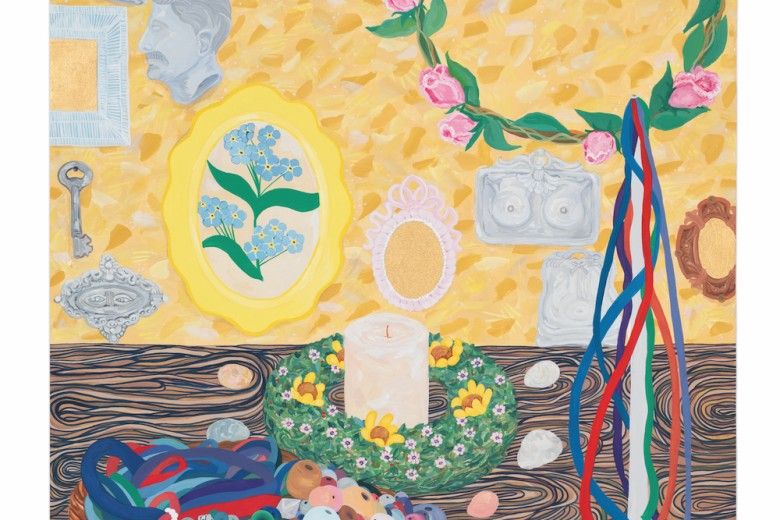
Now on view at the Brandywine, Abundance/Excess: A Contemporary Eye on Still Life features works by 10 contemporary artists and collectives who draw on the legacy of still life painting in their practice. The featured artists include Kate Abercrombie, Sungho Bae, Katie Butler, Ilana Harris-Babou, artist collaborators Nadia Hironaka and Matthew Suib, King Cobra, Tamara Kostianovsky, sTo Len, Cara Romero, and Misha Wyllie. These artists use objects to consider where wealth comes from, who holds it, and how we find and create it in our own lives, and their work often features the same subject matter and conceptual tropes as historic still lifes. In borrowing and reappropriating these motifs, they cast a charged new gaze on our material lives in the present.
In the following interview, Brandywine's Associate Curator, Kerry Bickford, talks with one of the participating artists, Kate Abercrombie, about her practice and her thoughts on still life as a genre.
Why still life? What draws you to objects as a subject matter?
I think it goes hand in hand with where I pull subject matter from originally, because most of my work starts with a personal narrative or something that I'm personally connecting to. A lot of the objects that I choose to represent resonate around that idea, or they are things that I live with that emphasize it. I draw from found imagery mixed with things from life. I tend to think of still life as being very domestic, in a way. And my work is very much about my experience as a woman. How you change internally, how you see yourself, and how the world sees you throughout your life as a woman.
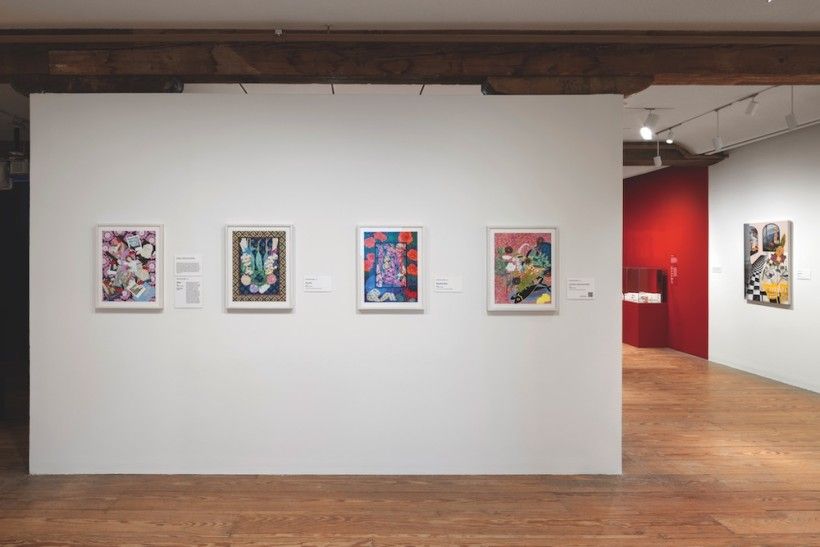
There are long iconographic histories associated with some of the objects you paint. Where do you like your work to sit in relation to that history? Are you drawing on those meanings, tweaking them, reinventing them?
It's a little bit of a combination. I don't want the work to be illustrative, because a lot of the choices are very personal and a little idiosyncratic. There is a tradition in still life where things have multiple meanings. I don't mind if there is legibility, but I think I'd want it a more open read than a conscripted one.
Your work has been described as a form of visual collage, due to your dense layering of patterns. How did you develop this visual density in your practice?
I've included pattern in my work for a long time. I worked as a silkscreen pattern printer on fabric for 16 years. Doing that work really built an appreciation for the history of textile design and repeat patterns. It just naturally moved into my own work. When I was in graduate school, I pulled a lot of the imagery out of my work, and it was just pattern abstraction. And before that, I was pulling the pattern away and just doing imagery. Now it's a mix of the two again. I learn the work through that type of repetition. That’s part of the discovery of the making.
You frequently evoke rituals in the content of your artworks. Do you treat art-making as its own kind of ritual?
In some ways, yes. My family is very Catholic, and the thing that sticks with me culturally is the ritual and the stories that come along with that. I enter my studio practice as a way of learning, or understanding, or thinking about communication, and I feel like that's a similar pathway to how you perform a ritual. In works like Intentions #1, those jars are from real life.
I do set up little shrines for intention.
How do you think about the passage, or presence, of time in your work?
My work takes time to make, so I live with a small idea for a long period of time. Some of the works are about current occurrence or experience, and then some are looking ahead or dreaming ahead. But it's always a glimpse of a moment. I think of it as like a line or a phrase almost, not a complete thought or complete action.
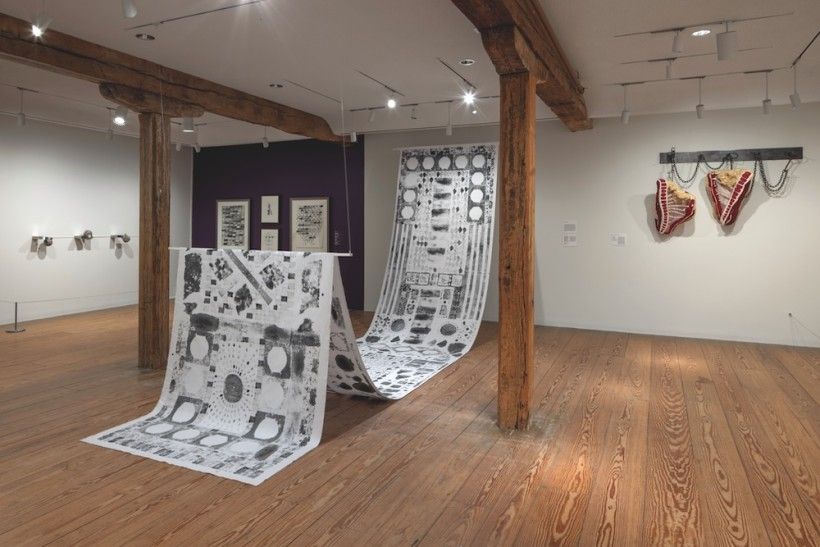
What does abundance mean or look like to you, in your life?
To me, abundance is joy in space. A lot of times my still life isn’t about the object, it’s more about how it’s fulfilling a part of an experience or a relationship. I want the work to feel hopeful.