The first solo presentation of the work of Helen Torr (1886–1967) in more than 25 years, Helen Torr offers a retrospective look at the achievements of this distinctive yet underrecognized modernist.
Born outside Philadelphia, Torr trained at the Drexel Institute and the Pennsylvania Academy of the Fine Arts, studying under artists William Merritt Chase and Thomas Anshutz alongside classmates Charles Demuth and Charles Sheeler. She spent much of her adult life living and working along the coast of Long Island aboard the sailboat Mona, which she shared with her husband, renowned artist Arthur Dove.
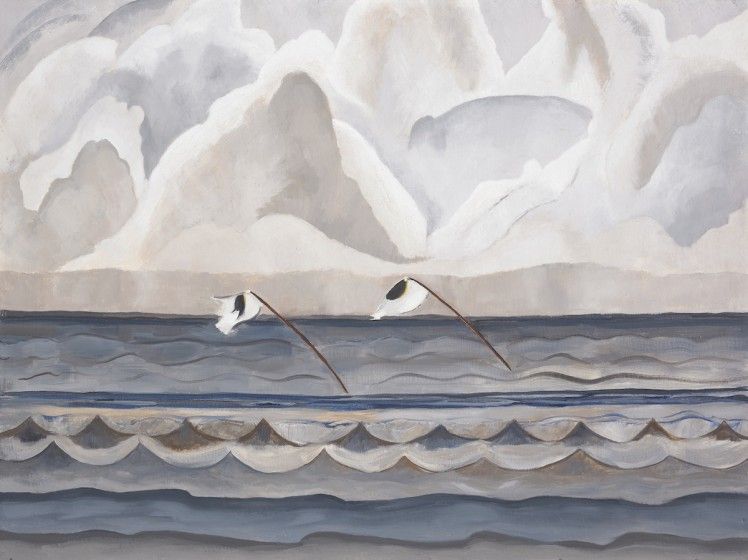
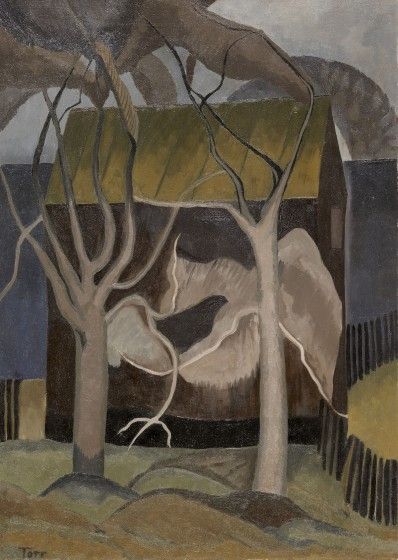
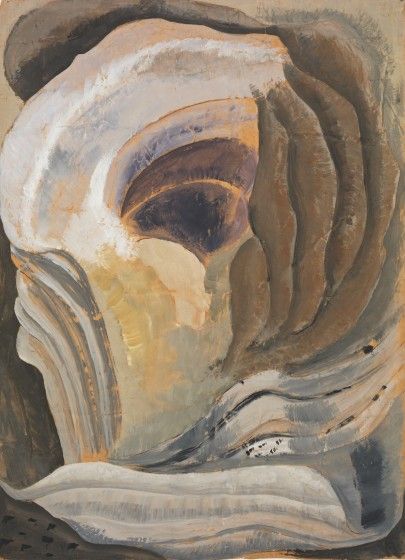
Known to friends and family as “Reds” because of her striking auburn hair, Torr developed a highly personal visual language shaped by the shifting effects of light and weather on her coastal environment. She often painted on salvaged materials like wooden grocery crates and scrap paper, with the intimate scale of her works partly dictated by the confined spaces aboard the Mona. Torr explored the most basic elements of her subject matter by distilling her surroundings into compositions that combine close observation with a distinctive abstract vision. Across oil, charcoal, and pencil, her works transform intimate, often modest subjects—from found flowers, shells, and feathers to local vistas captured from the deck of the Mona—into resonant studies of color and form.
Although Torr moved in the orbit of the influential modernist photographer and gallerist Alfred Stieglitz—a major supporter of her husband’s career—and her contemporaries praised her work, she exhibited only rarely during her lifetime and never had a solo exhibition. Constrained by health challenges, financial pressures, and the gender dynamics that shaped the careers of so many twentieth-century women artists, Torr gradually stopped painting after Dove became ill in the late 1930s and she assumed the role of his primary caregiver. Although Torr planned to have her remaining works destroyed after her own passing, her sister preserved the artist’s oeuvre and later donated many works to the Heckscher Museum of Art in Long Island, where Torr’s first solo exhibition was presented posthumously in 1972.
Amanda C. Burdan, Ph.D., Senior Curator, and Zoe Dobuler, Project Assistant Curator, will assemble more than 50 works that Torr created during her concentrated period of artistic activity from 1926 to 1936 for this historic exhibition. Helen Torr highlights an artist of remarkable sensitivity and originality, whose evocative sense of place remains vivid, intimate, and distinctly modern.