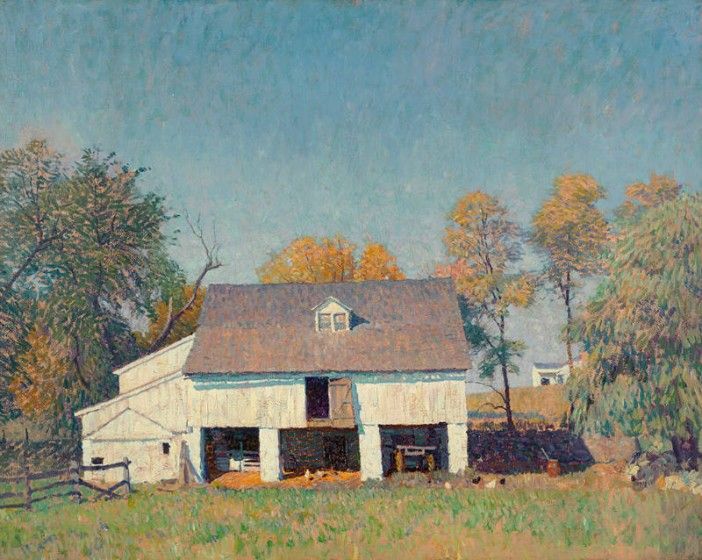
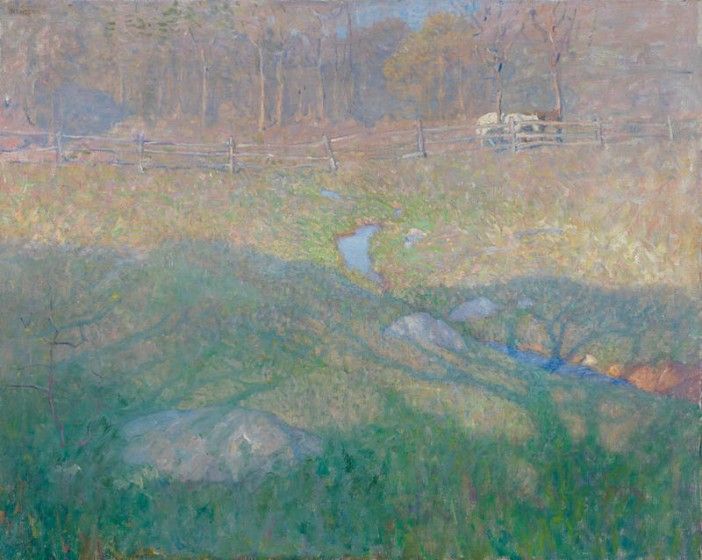
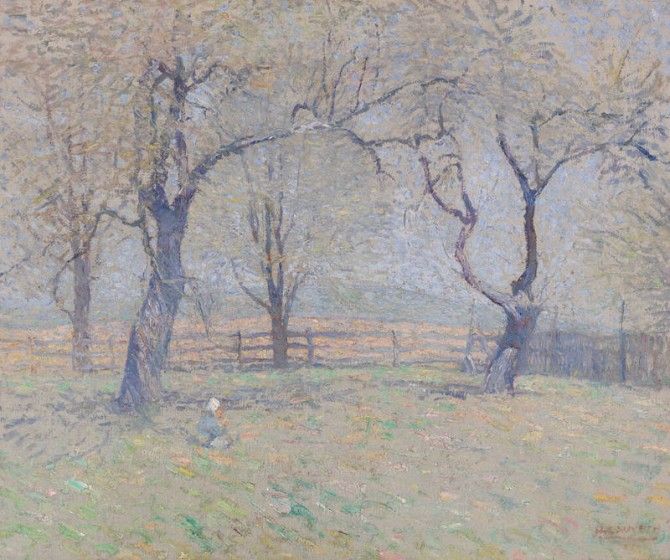
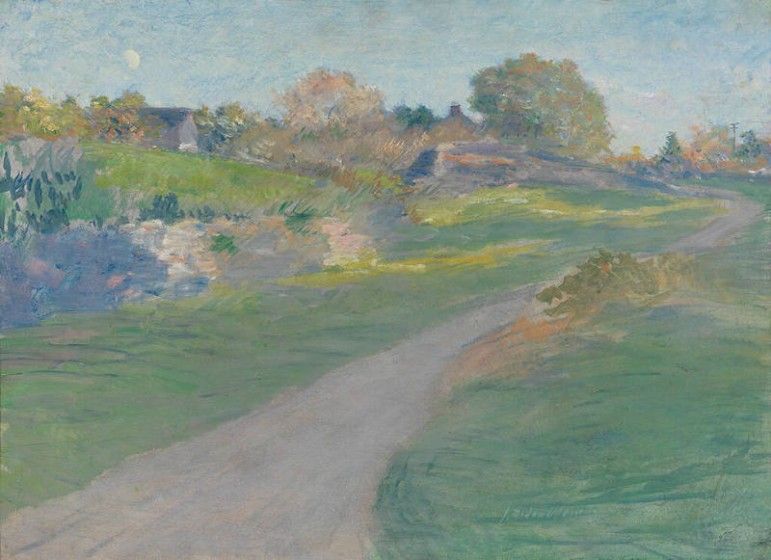
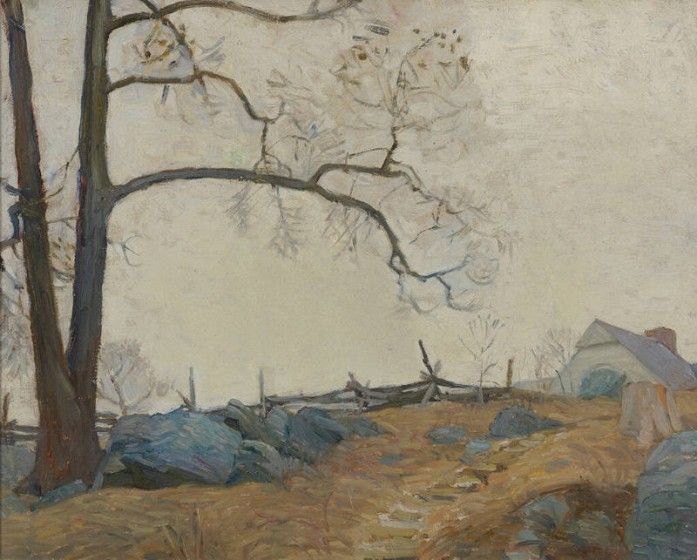
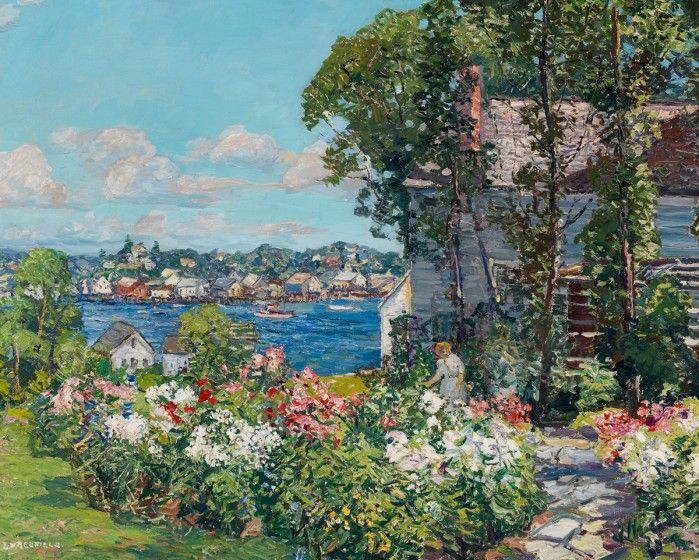
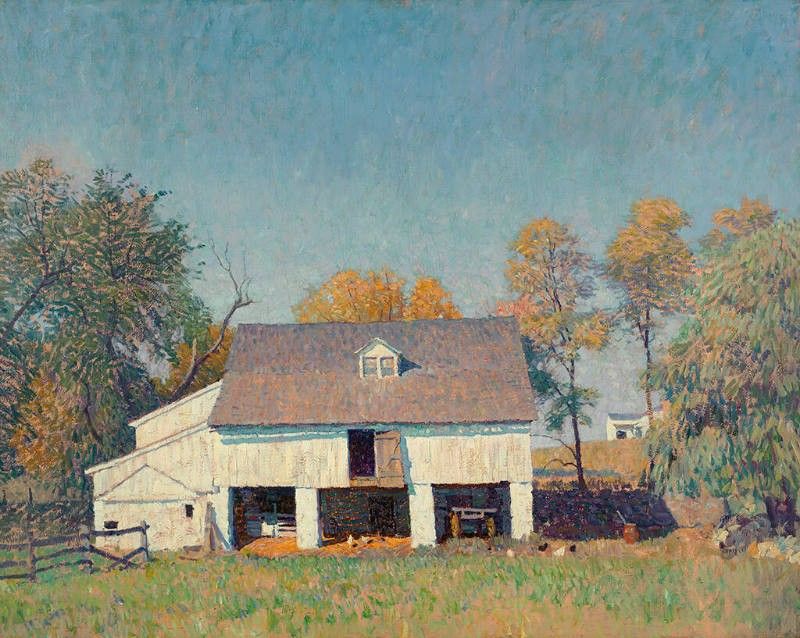
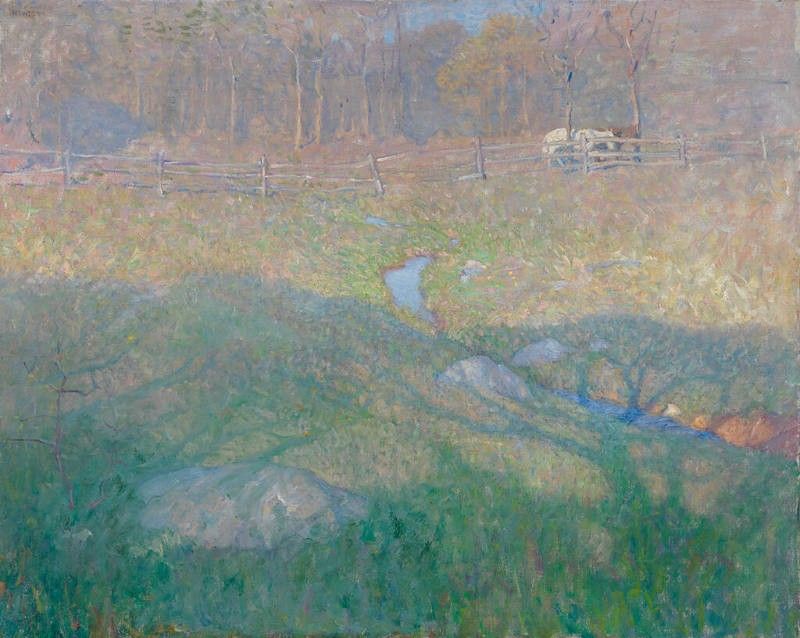
A close look at the paintings made during N.C. Wyeth’s early years in Chadds Ford.
Over the first ten years of his life in Chadds Ford, from 1909–1919, N.C. Wyeth achieved commercial and critical success as an illustrator, publishing works that included Treasure Island, The Black Arrow, and The Last of the Mohicans. Over the same decade, he desired to be recognized as an artist—a painter—rather than an illustrator, and in pursuit of this goal established a concurrent practice of landscape painting. N.C. Wyeth and American Impressionism explores the influence of American impressionist and tonalist painters on Wyeth’s work during these formative years.
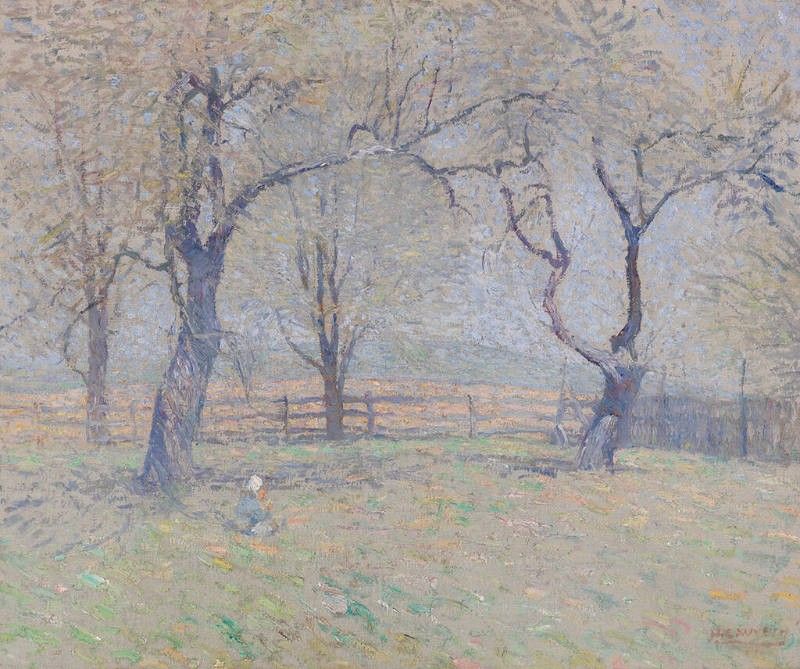
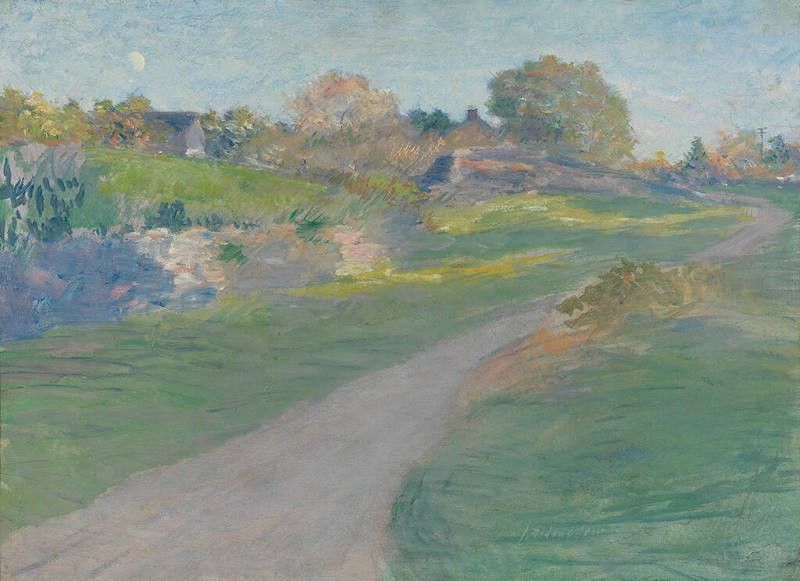
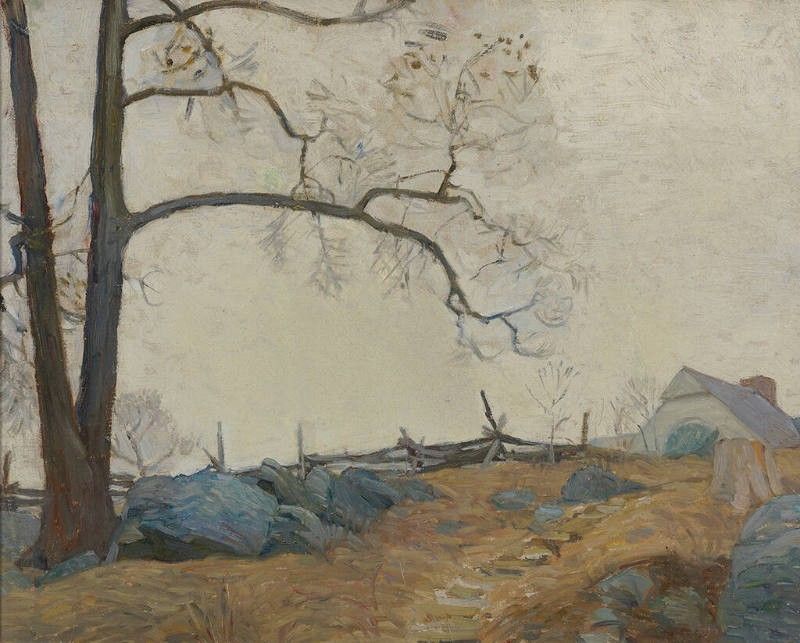
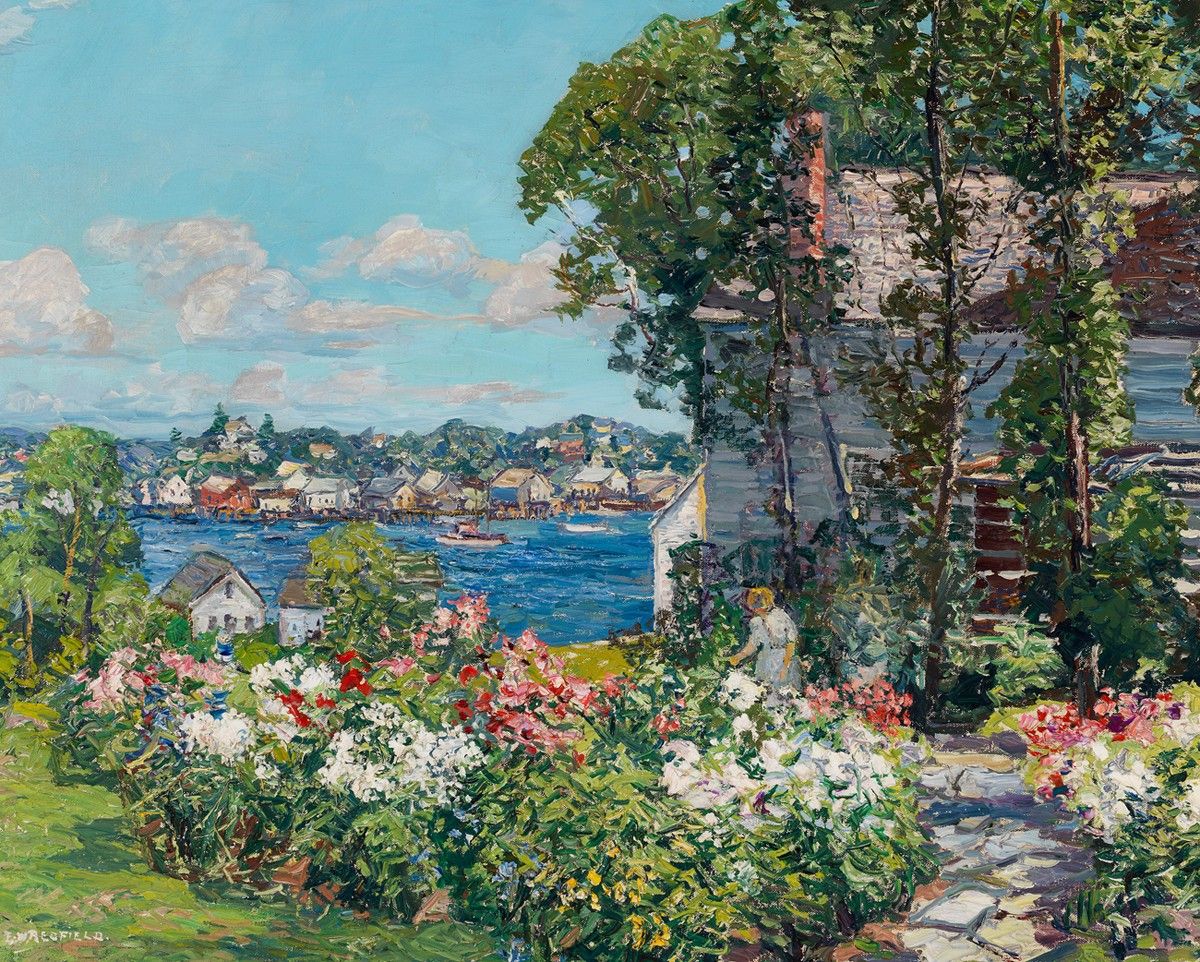
Before moving to Chadds Ford to study at the Howard Pyle School of Art, Wyeth studied with Boston impressionist George Loftus Noyes in Annisquam, Massachusetts, and his early letters express admiration for other prominent members of the Boston school. After studying under Pyle, he developed collegial relationships with several prominent members of the New Hope school of American impressionism, including Daniel Garber, William Langston Lathrop, and Edward Redfield. Wyeth’s landscapes from this period demonstrate many technical and compositional hallmarks associated with American impressionism, capturing atmospheric effects utilizing broken brushstrokes of un-mixed color, cropped compositions, and subjects from everyday life. However, over the course of the decade, Wyeth’s opinions of local impressionists became more ambivalent and he critiqued their lack of originality while he labored to develop his own unique identity as a painter.
This exhibition features a dozen works by N.C. Wyeth, including several recent acquisitions from the bequest of Betsy James Wyeth. These works will hang alongside paintings by American impressionists with whom Wyeth socialized and studied, including Daniel Garber, William Langston Lathrop, Edward Redfield, George Loftus Noyes, and J. Alden Weir. Together, this selection of work offers a nuanced perspective on Wyeth’s early experiments and his artistic influences.