Celebrating the Reopening of Twin Bridges
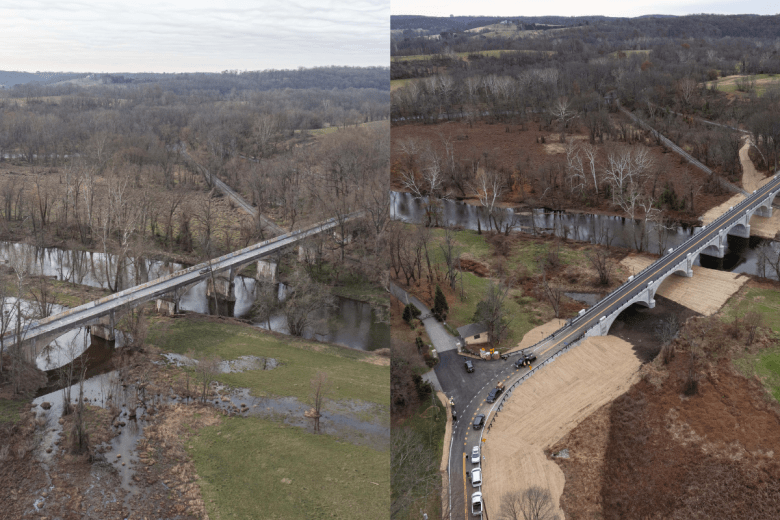
After nearly two years, the detour signs directing motorists away from the Twin Bridges over the Brandywine, just south of our campus in Chadds Ford, were finally removed last November. While the bridge re-opening is something to cheer from a convenience perspective alone, there are far more important aspects of the project to celebrate.
The name “Twin Bridges” originates from two covered bridges that once crossed the Brandywine, known as the Pyles Twin Bridges. Those bridges were replaced by a single reinforced concrete closed spandrel arch bridge in 1925, though the name Twin Bridges persisted.
When the Pennsylvania Department of Transportation (PennDOT) first announced the need to replace Twin Bridges over fifteen years ago, local residents and the Brandywine Conservancy & Museum of Art (Brandywine) took note. “Friends of Twin Bridges,” an ad hoc community organization, was formed in 2008 to advocate for a design that was sensitive to the rural and historic character of the region. Ford Draper Jr. was the spokesperson for the Friends of Twin Bridges and tirelessly worked to advocate for sensitive bridge design. Ford noted in a survey conducted in 2019 that the area genuinely deserved the effort to seek a superb bridge design in keeping with the merits of the scenic by-way.
Since PennDOT’s replacement of Twin Bridges used federal funds, Section 106 of the National Historic Preservation Act of 1966 required that the effect of the project on any resource eligible for the National Register of Historic Places (National Register) be considered. If an adverse impact is anticipated, Section 106 requires the project to be undertaken in a manner to mitigate or eliminate the impact.
At the time, there were no resources listed on the National Register in the immediate vicinity of Twin Bridges, so the key word in the law was “eligible.” Per the Section 106 requirements, PennDOT hired consultants to research potential eligibility. This led to the submission to the Pennslvania Historical and Museum Commission (PHMC) of a Pennsylvania Historic Resource Survey Form (HRSF) for what was called at the time the “Bissell/Hill Girt/Beverly Rural Historic District.” In 2011, PHMC ruled that the district was indeed eligible for the National Register.
Once the district had been determined eligible for nomination, the next step was to work with the PHMC on formal nomination of the district to the National Register. The HRSF needed to be expanded and corrected and additional research and documentation was required. Friends of Twin Bridges raised funds to support Brandywine to take the lead on formal nomination. John Snook, Senior Advisor, led the process for Brandywine along with consultant Jane Dorchester. “Twin Bridges Rural Historic District” was officially added to the National Register on September 18, 2017.
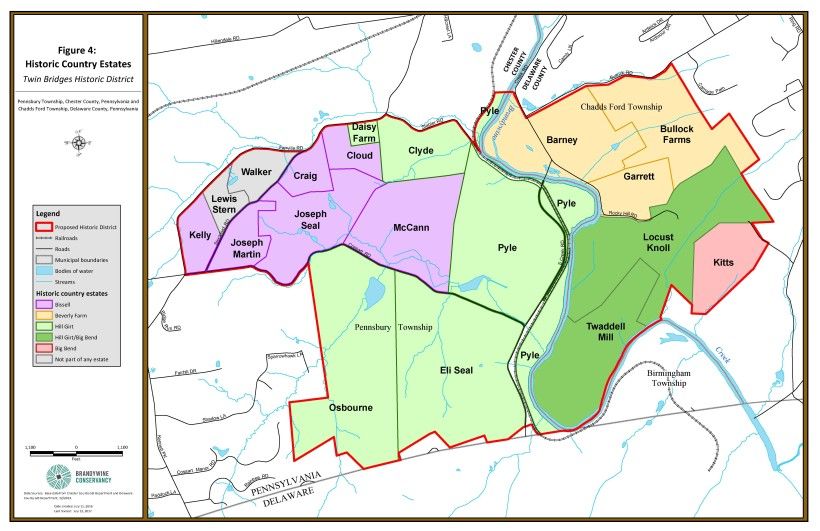
Twin Bridges was determined to be a contributing resource within the Twin Bridges Rural Historic District. Because of this, Section 106 required PennDOT to undertake extensive study of the bridge to determine the viability of rehabilitation instead of replacement. It was no surprise to anyone familiar with the bridge’s condition that rehabilitation was not feasible. The bridge would have to be replaced.
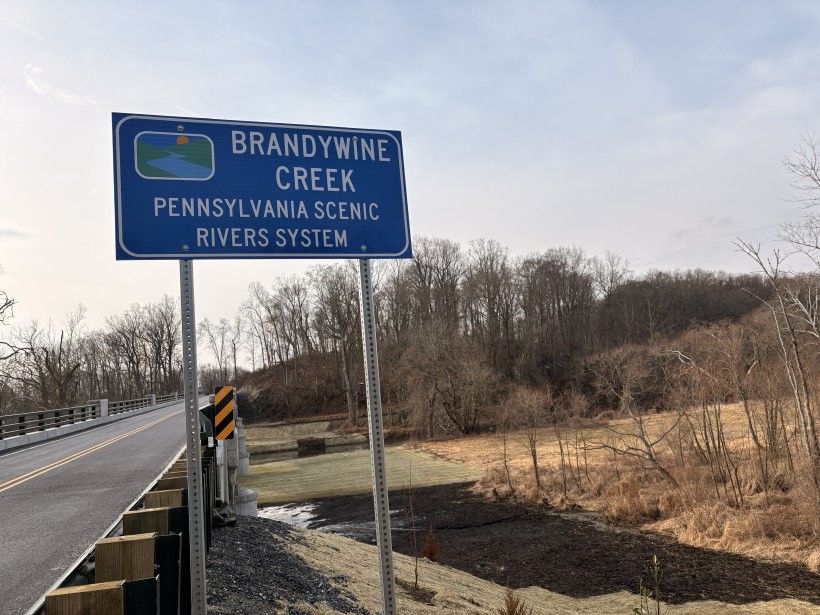
Brandywine and the Friends of Twin Bridges moved next to advocacy for a sensitive design of the replacement bridge. In addition to being a contributing resource in the Twin Bridges Rural Historic District, the location of the bridge along the state-designated Brandywine Valley Scenic Byway and the Lower Brandywine Scenic River made the design of the new bridge critical to conservation of community character. The community advocated not only for overall design, but also for details such as width, railing treatment, facing, traffic calming effects, and pedestrian and bicycle considerations.
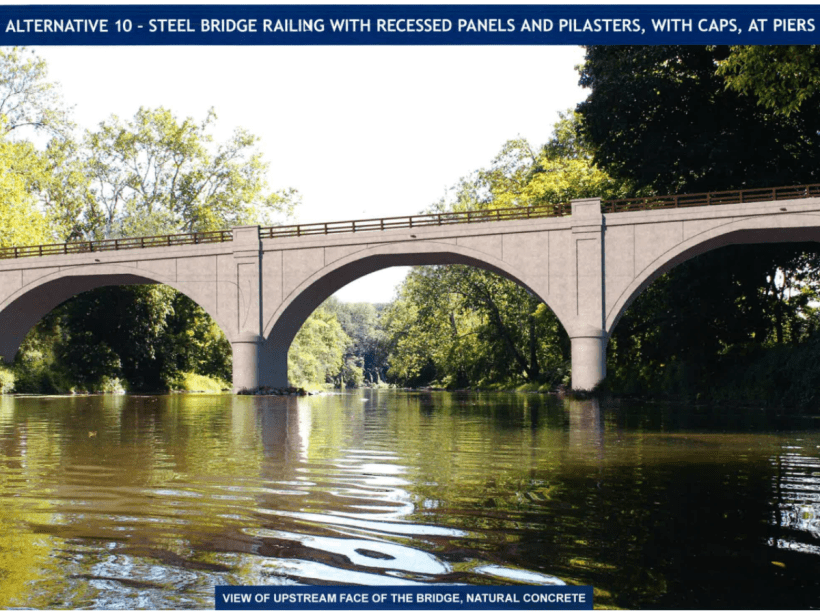
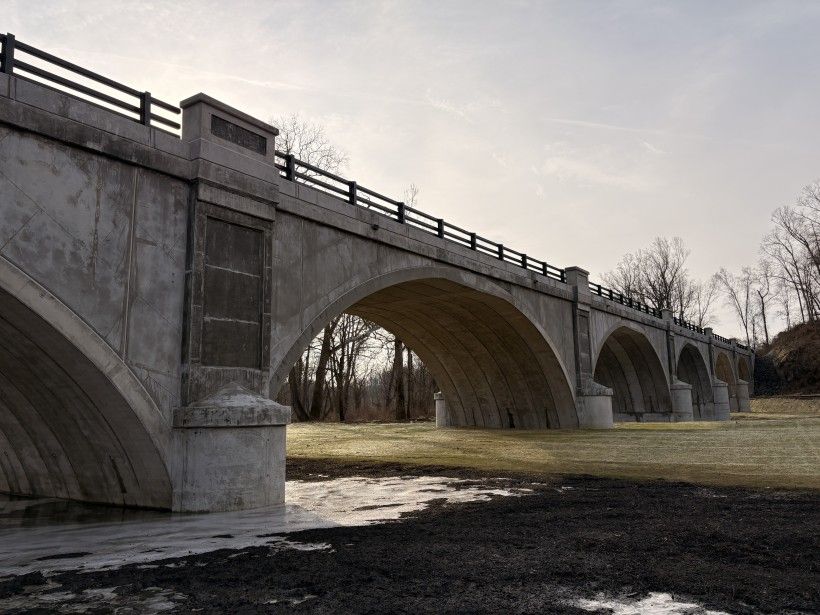
Working with PennDOT, it was determined that the bridge would be replaced on its existing alignment and grade to maintain the historic character and traffic calming benefits of the bridge. Responses from the community and interested parties indicated general consensus that the new bridge should be a concrete arch bridge similar to the existing Twin Bridges. In addition, it was essential that the bridge barriers be open so that motorists could view the Brandywine Creek and surrounding landscape from the bridge. Additional decisions regarding the treatment of the railings (standard steel vs. painted), and the bridge deck surface (concrete vs. asphalt overlay to blend with adjacent roadway) were also discussed.
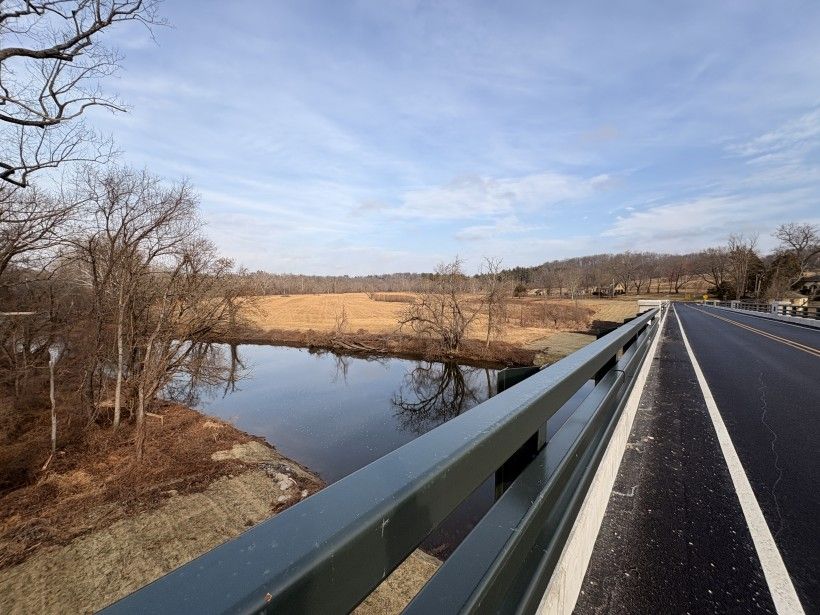
Anyone who has had a chance to drive over the new Twin Bridges will appreciate the thought and hard work that went into its design. The views of the Brandywine and the surrounding landscape offer a glimpse of the historic landscape that made the Twin Bridges Rural Historic District a reality.
Unfortunately, Ford Draper Jr. passed away in June of 2024 before he was able to see the finished bridge that resulted from his tireless efforts. He was involved in the process up until the end, working with Brandywine during PennDOT’s design and permitting process. The Drapers, along with their neighbors on the Chester County side of the Brandywine, the Haskell Family, worked with PennDOT and Brandywine to ensure that the land was protected and restored during and after construction and that the existing conservation easements held by Brandywine adjacent to all four corners of the Bridge were respected.
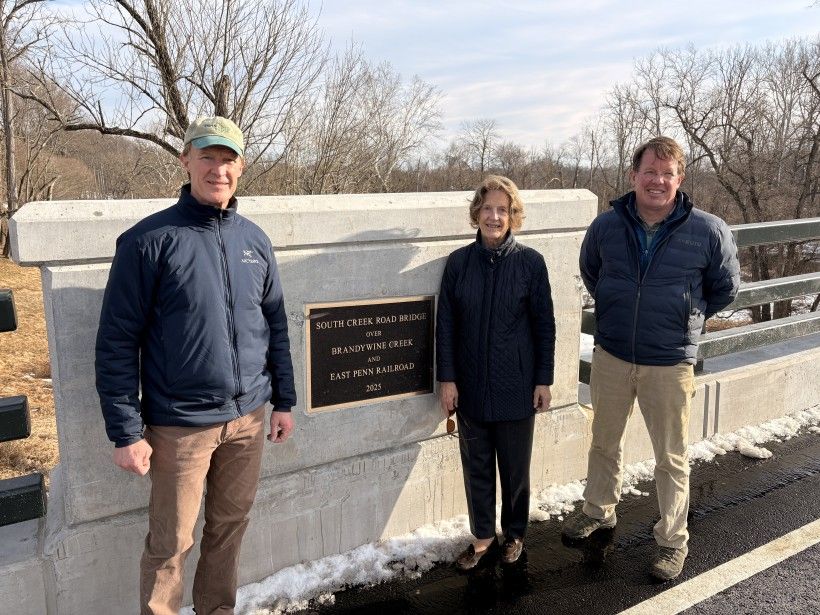
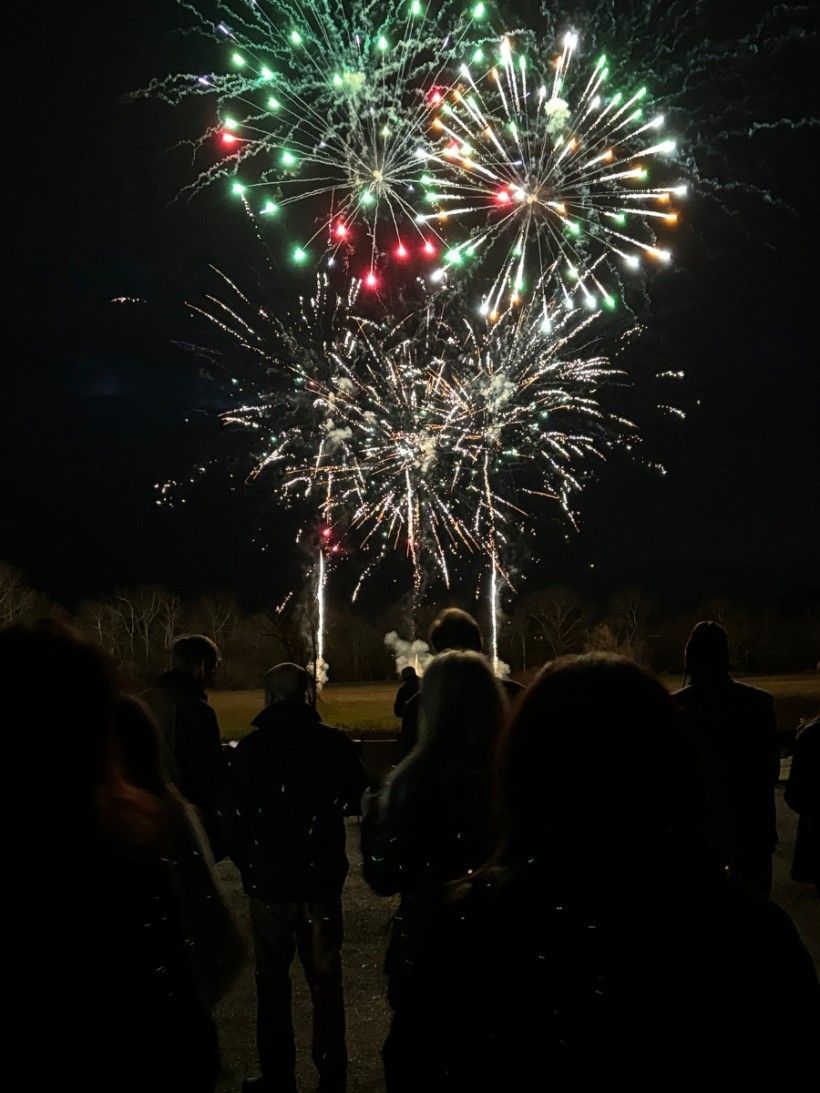
The Draper Family hosted a celebration on the evening of November 12, 2025 in honor of the bridge re-opening and the hard work and dedication of the community, including Ford Draper Jr., George A. “Frolic” Weymouth, the Haskell Family, Jeannie and Wendell Fenton, and so many others that ensured a sensitive bridge replacement that adds to the character and beauty of the Twin Bridges Rural Historic District, the Brandywine Scenic Byway, and the Lower Brandywine Scenic River.
Sources:
New historic district proposed in Chadds Ford. (November 2011). Brandywine Catalyst. Volume 39, Number 4.
National Register of Historic Places Registration Form (Form No. 10-900). United States Department of the Interior, National Park Service. Twin Bridges Rural Historic District. OMB No. 1024-0016. Prepared by Jane E. Dorchester, Architectural Historian, with Brandywine Conservancy staff and PA SHPO for the Brandywine Conservancy. July 26, 2016.
Header photo credit: Twin Bridges prior to replacement (left) and completed (right). Photo credit: Colin Kund, H&K Group, Inc.