Invasive Species Spotlight: Japanese Honeysuckle
Originally introduced from East Asia in the early 1800s as an ornamental groundcover and for erosion control, Japanese vine honeysuckle (Lonicera japonica) has spread aggressively throughout much of the eastern United States. It commonly invades forest edges, riparian corridors, roadsides, old fields, and disturbed areas. Japanese honeysuckle grows rapidly in a wide range of soil and light conditions and can persist in both full sun and deep shade. By forming dense mats and climbing over trees and shrubs, it outcompetes native vegetation, reduces biodiversity, and alters forest structure.
Identification
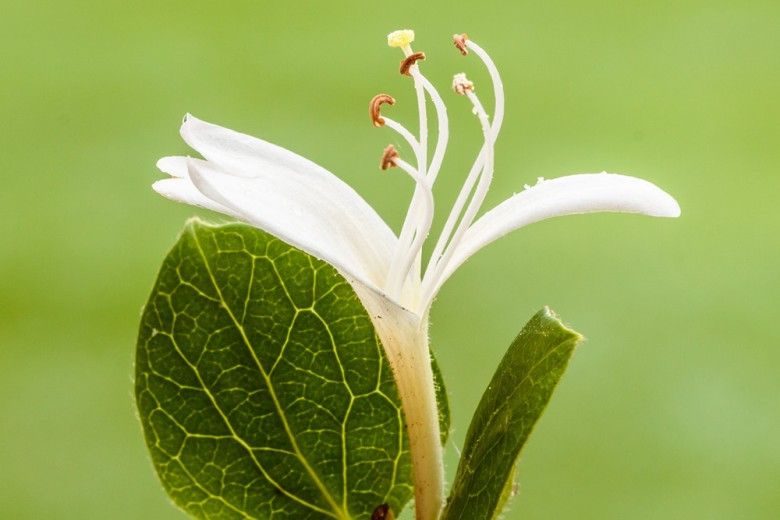
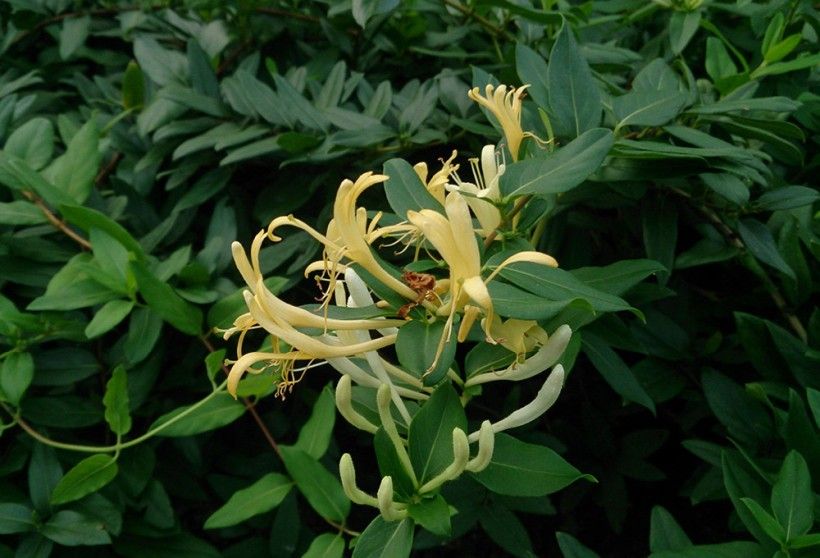
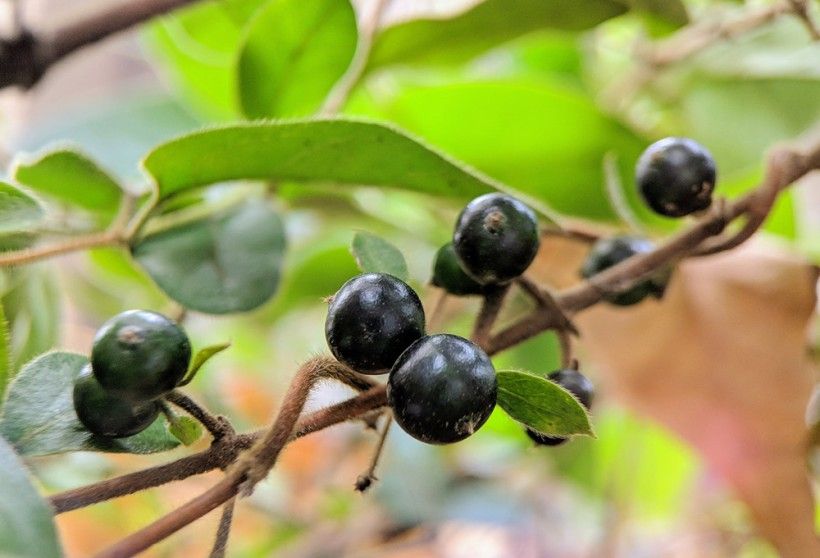
Japanese honeysuckle is a semi-evergreen, perennial, woody vine that can grow more than 30 feet in length. Stems are slender, twining, and often turn woody with age. Leaves are opposite, oval, and typically 1.5 to 3 inches long. In colder climates, the leaves may drop during winter. Plants produce fragrant flowers from April through July that are white to yellow in color and darken with age. These flowers are followed by small, black berries that ripen in late summer to fall.
Spread
Japanese honeysuckle spreads both by seed and vegetative growth. Birds readily consume and disperse the berries, allowing the plant to establish far from original planting sites. Vines also spread locally by rooting at stem nodes where they contact the soil. Its rapid growth rate, extended growing season, and tolerance of shade give it a competitive advantage over many native plants.
Control
Japanese honeysuckle is difficult to eradicate due to its extensive root system and ability to resprout. It can be suppressed without herbicides through repeated cutting, mowing, or hand-pulling, which weakens plants over time by preventing photosynthesis and seed production. Cutting vines at the base, especially before flowering and berry formation, combined with ongoing monitoring and replanting with native species, can significantly reduce its spread but requires long-term commitment. Herbicide treatments are typically required for long-term control. Foliar applications of glyphosate or triclopyr in late fall, when many native plants are dormant, are effective for large infestations. For individual vines, the cut-stump method can be used by cutting vines near the base and immediately treating the cut surface with an appropriate herbicide. Treated areas should be monitored for several years and retreated as necessary.

Native Alternatives
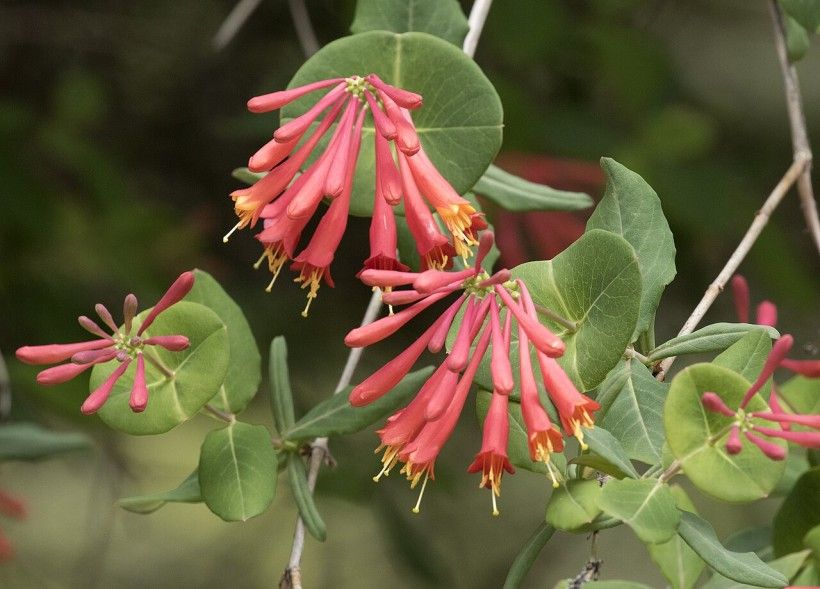
A great alternative to invasive vine honeysuckle is the native coral honeysuckle, or Lonicera sempervirens. This native vine is an important and nutrient rich food source for pollinators, including hummingbirds who are attracted to its gorgeous coral pink, tube-shaped flowers. Lonicera sempervirens is a quick growing vine that prefers growing conditions similar to that of invasive vine honeysuckle. It will climb up fences, posts, or other sturdy, nearby plants and can also spread as a ground cover. However, unlike the invasive honeysuckle, it will not take over an area or out-compete other nearby plants. It can be grown in the ground, or in containers and will produce the most blooms in a full sun environment. For more on coral honeysuckle and other great native plant alternatives, visit Brandywine’s Native Garden Hub at www.nativegardenhub.org.