Restoring the Brandywine Creek to a Free-Flowing State
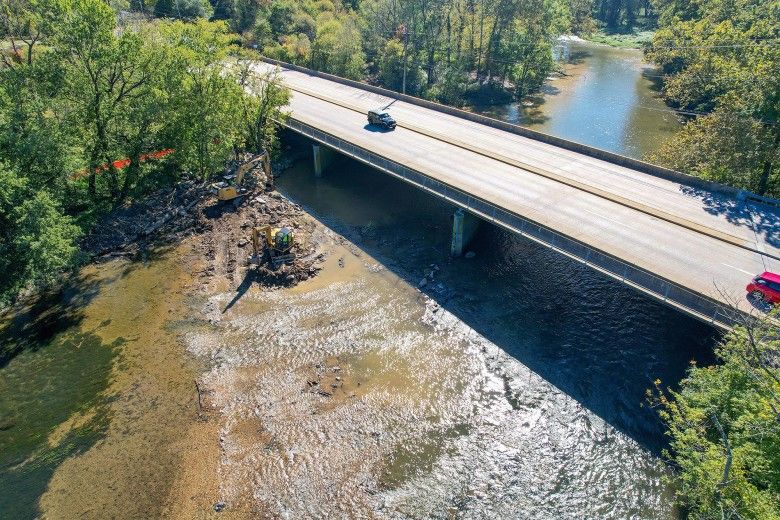
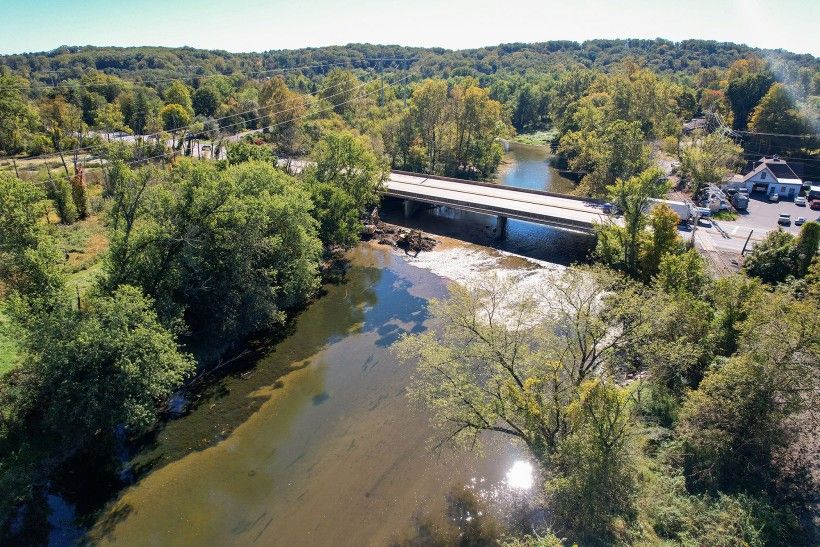
A stretch of the Brandywine Creek in Chadds Ford is now flowing freely again following the removal of Hoffman’s Mill dam, a late-19th-century low head dam located just upstream from the U.S. Route 1 bridge in Chadds Ford and Pennsbury Townships. The work to remove the breached dam completes a nearly six-year effort led by the Brandywine Conservancy.
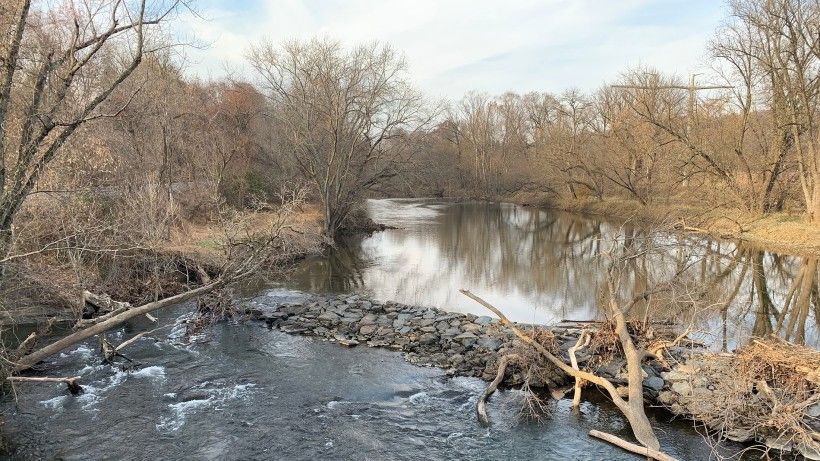
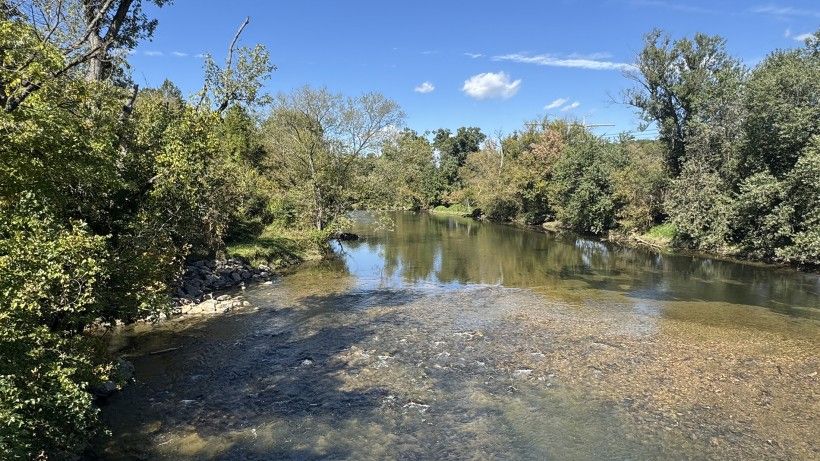
A dam that outlived its purpose
Originally built to power Hoffman’s Mill—now part of the Brandywine Museum of Art—the dam supported an active sawmill until the mid-20th century. In recent decades, it served no functional purpose and was breached on its western side. The Conservancy began evaluating the removal of the dam in 2020 and concluded it would be a net benefit to the Creek and the surrounding community.
The key benefits of the dam removal include:
- improving safety and recreation by eliminating a hazard for paddlers, tubers, and other users of the Creek who needed to portage around the dam to continue downstream
- restoring aquatic habitat and fish migration previously blocked by the dam
- helping reduce flooding in the Chadds Ford area.
With no real storage reservoir, the dam trapped debris carried by floodwaters—increasing the artificial height of the impediment—which exacerbated flooding events in Chadds Ford and upstream of the dam. The removal of the dam was also identified as a recommended flood mitigation project in the 2025 Brandywine Flood Study—published and led by the Conservancy in partnership with Chester County Water Resources Authority and University of Delaware Water Resources Center.
Bringing back the American shad
The removal of the dam also supports a regional effort to help American shad swim up the Brandywine to spawn. That migration has been blocked since the first dams went up in Wilmington, DE in the early 1700s.
"After nearly six years of planning, design work, and permitting, it’s incredibly rewarding to see the removal of the dam and the Brandywine Creek returning to its natural free-flowing state,” said Rob Daniels, project manager and Assistant Director of Community Services at the Brandywine Conservancy. “Freeing this stretch of the Creek benefits our broader mission and some of our ongoing efforts to improve recreational access to the Brandywine, lessen flooding in the Chadds Ford area, and to assist in a regional effort to facilitate the migration of American shad up the Brandywine to spawn."
A Team Effort
“This project is a win for everyone who loves the Brandywine Creek, from the paddlers and anglers who use it to the neighbors who live alongside it and the fish and wildlife that call it home,” said Grant DeCosta, Director of the Brandywine Conservancy. “We’re grateful to our funders, partners, and broader community who have helped make this long-awaited moment possible.”
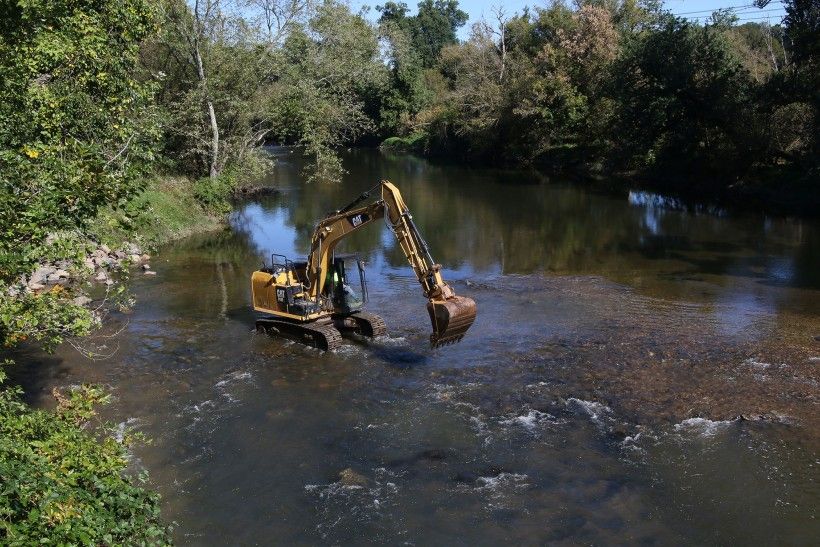
The dam removal project was funded by the National Fish and Wildlife Foundation, with support from the U.S. Fish and Wildlife Service, Pennsylvania Department of Conservation and Natural Resources, Chadds Ford Township, and Pennsbury Township. Engineering consultant Ramboll provided design services, guided the extensive permitting process in partnership with Conservancy staff, and oversaw the construction work. Stonewood Landshaping, a firm experienced in stream restoration and stormwater projects, conducted the dam removal.
The Conservancy coordinated with a variety of stakeholders in the vicinity of the dam site, including the Pennsylvania Department of Transportation, PECO, and the East Penn Railroad. As part of the larger permitting process, input was also sought from both Townships, the Chadds Ford Historical Society (a neighbor of the project), the Chester County Planning Commission, and the Delaware County Planning Department.
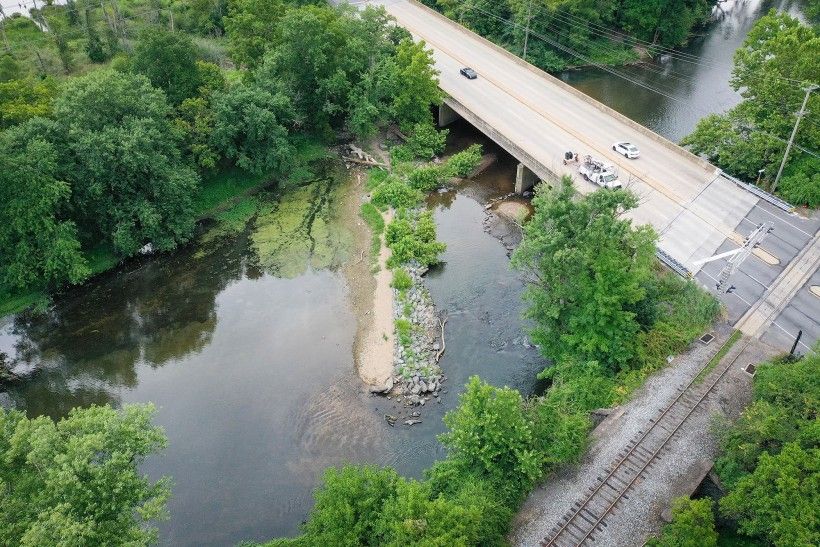
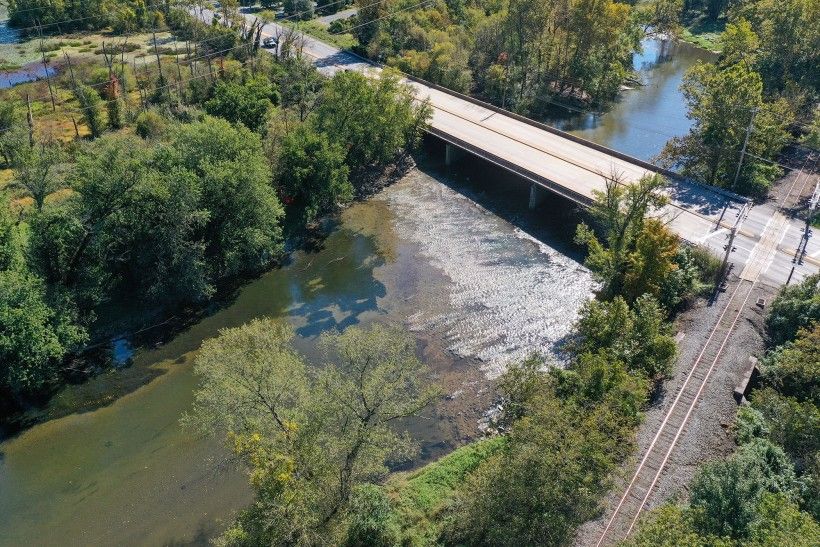
To honor the site’s history, the Conservancy documented the dam with photography and video and is evaluating ways to reuse materials from the site. The Conservancy will also develop educational opportunities to share the history of Hoffman’s Mill dam and the role it played in the Chadds Ford area.
Catch the Action
Watch a video of the dam being removed below.
Header image: Aerial view of the final stages of dam removal. Photo by Craig Thomas / Chester County Water Resources Authority