Grassland Bird Conservation in the King Ranch Area
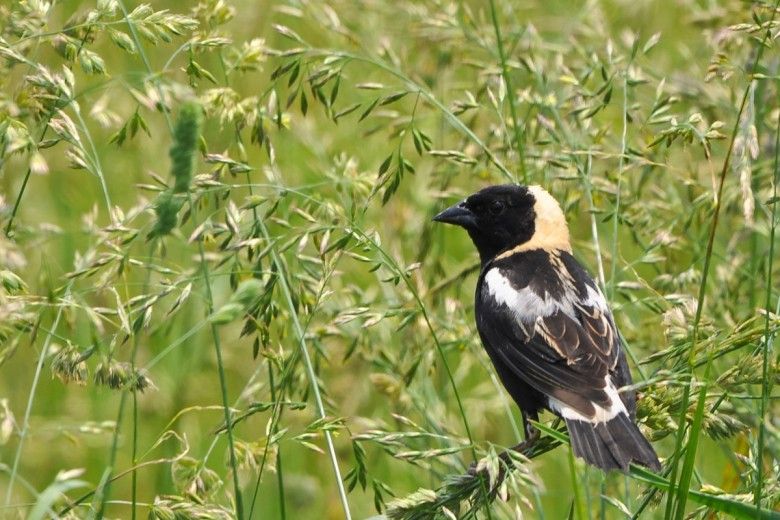
Every spring, hayfields in Chester County come alive as grassland birds return from their wintering grounds to breed. Bobolinks flutter low over the grasses, singing their bubbling songs in vivid display, looking for a mate. Having flown over 6,000 miles from their wintering territory in Argentina, they fill the rapidly growing hayfields with sound. Eastern Meadowlarks whistle their songs perched on fence posts, while Grasshopper and Savannah Sparrows buzz from the grasses. These are some of the species that Brandywine’s easement stewards have been searching for this summer to increase our understanding of how these birds are using protected lands and to inform conservation efforts.
Grassland birds, such as the Bobolink and Eastern Meadowlark, are in steep decline across the United States. Since 1970, grassland bird populations have declined by over 40 percent with much of that due to habitat loss. As native prairie and grassland are converted into agricultural land, these birds lose the spaces they require to forage and reproduce. Eighty-five percent of grassland habitat in the country is privately owned, and as a result, grassland birds are particularly affected by the ways in which these lands are managed. However, grassland birds’ reliance on private and working lands also provides unique opportunities for collaborative conservation efforts.
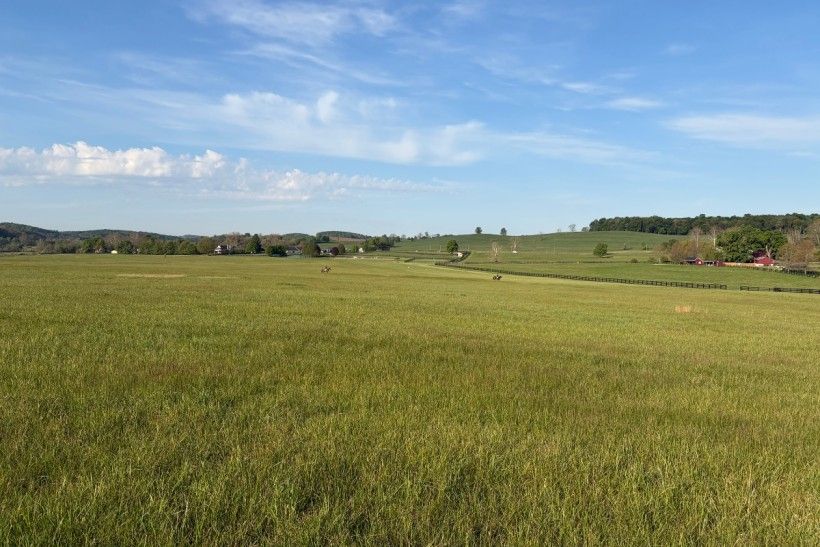
The King Ranch area in Chester County has been at the forefront of such efforts. Since the 1980s, Brandywine has been instrumental in conserving land in this region and now holds conservation easements on over 18,500 acres of near-contiguous open space. The King Ranch area hosts the highest density and diversity of breeding grassland birds in southeastern Pennsylvania, and in 2007, in recognition of the critical habitat the area provides and with the support of the Conservancy, the area was designated an Important Bird Area by Audubon Pennsylvania and the Ornithological Technical Committee of the Pennsylvania Biological Survey.
Where Conservation and Agriculture Meet
The work hasn’t stopped there. This spring, the Brandywine Conservancy, in collaboration with Willistown Conservation Trust, was awarded a $25,000 grant from the Cornell Lab of Ornithology to support grassland bird conservation efforts in the King Ranch area. The grant funds continued efforts by the Grassland Bird Collaboration, a partnership between local landowners, farmers, and conservation organizations, to support breeding grassland bird populations in the region by promoting bird-friendly management practices on working agricultural lands.
One example of such management is delayed hay harvest. Hayfields are typically mowed in June, which overlaps with peak breeding activity for many grassland birds. Since these species nest on the ground, mowing causes high levels of nest failure and fledgling mortality. However, if mowing is delayed, typically until after July 1 (we historically have recommended July 15), ground-nesting birds can complete their breeding cycles undisturbed. There is high demand for late-season hay due to the presence of the mushroom industry in the area, giving farmers a viable economic path for delaying hay harvest. To date, the Grassland Bird Collaboration has enrolled approximately 2,500 acres of grassland habitat in bird-friendly management in the King Ranch area, providing a much-needed boost to birds nesting in our hayfields.
Learning from the Landscape
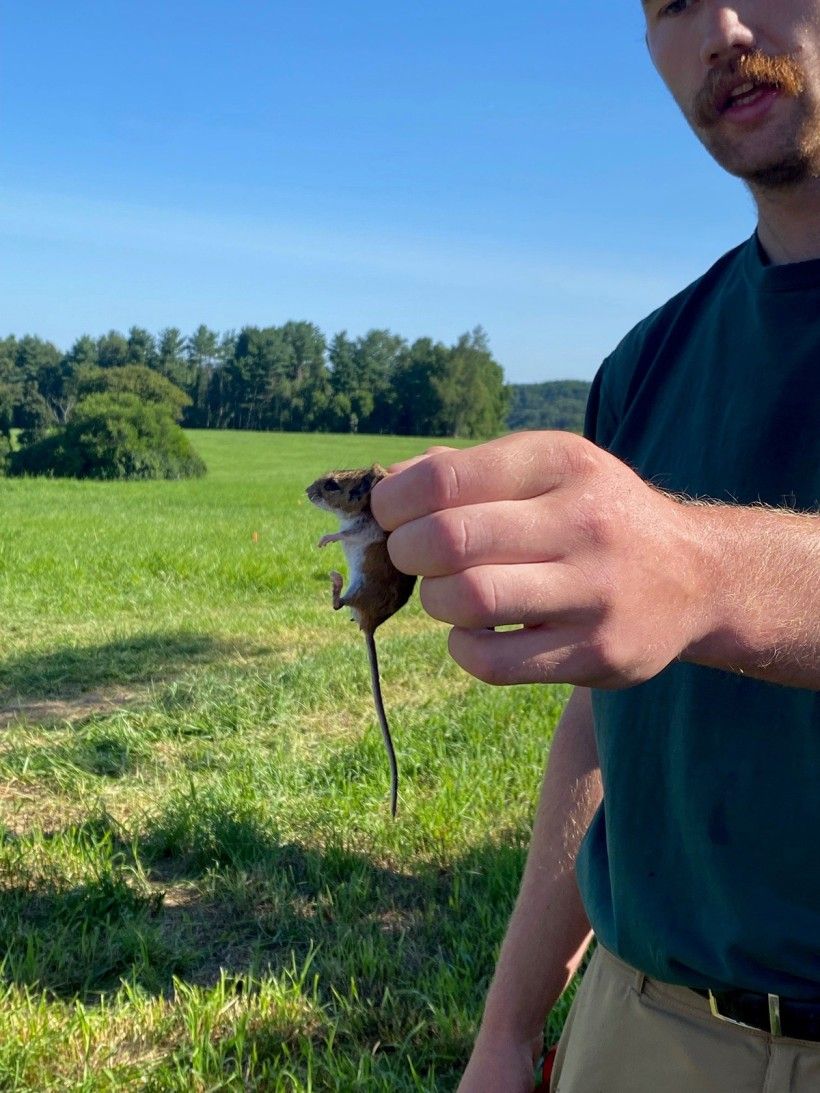
Due to its rich conservation history and status as an Important Bird Area, the King Ranch area has attracted the attention not only of local organizations, but of outside researchers as well. In February, Brandywine was approached by Colton Moyer, a Ph.D. student at SUNY ESF interested in studying how grassland birds and small mammals are using the landscape in the greater King Ranch, including an in-depth study at Brandywine’s Laurels Preserve. This summer, Colton deployed microphones and camera traps across hayfields to estimate the population densities of grassland birds and small mammals and to assess how different species are interacting with each other. His research builds upon years of collaborative conservation work in the King Ranch area, and his findings will help inform management practices to best support wildlife populations in the Laurels Preserve and beyond.
Keeping the Hayfields Singing
Thanks to countless landowners and farmers with a strong conservation ethic, much of the King Ranch area is protected in perpetuity, providing habitat for diverse communities of birds and wildlife within the agrarian landscape. Its conservation legacy remains strong and active, as landowners, farmers, land trusts, and researchers continue to collaborate to implement conservation practices that benefit both birds and people, but threats remain. Due to habitat loss and climate change, grassland birds continue to decline, and our hayfields are getting quieter. We must strive to continue and expand upon bird-friendly land management to support these critical species that call our hayfields home.
If you would like advice on how to better manage your grasslands to support the greatest diversity of grassland-nesting birds, please contact the Conservancy at [email protected].
Header image: Bobolink (Dolichonyx oryzivorus). Photo credit: Jim Moffett