Hoffman’s Mill Dam Removal
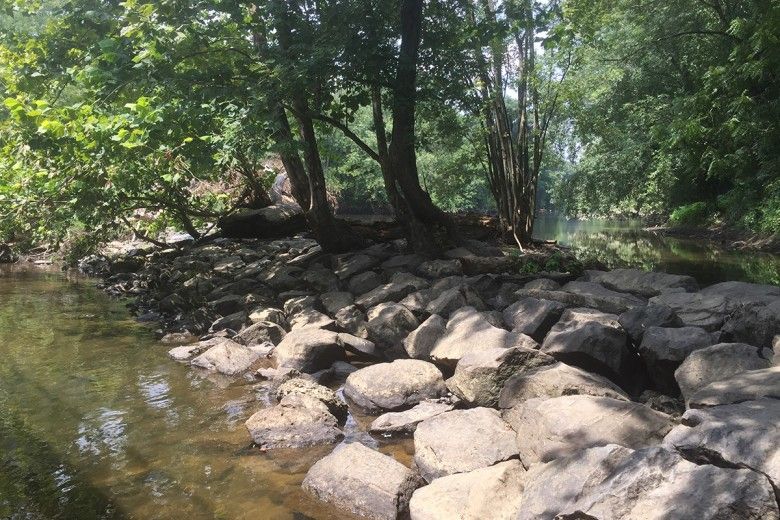
The construction of low head dams—which allow water to flow over their entire top—played an important role in the settlement, development, and growth of our Nation, especially in southeastern Pennsylvania. These dams harnessed the power of water by storing a large volume (or head) of water that was then directed into a channel (known as a mill race) carrying a swift current of water that drove a water wheel. This action provided mechanical power to turn shafts and gears to perform specific milling tasks. Early mills along the nation’s rivers helped produce products that were critical for a young America. Grains were milled into flour, trees were processed into lumber and paper, and cotton was woven into textiles. However, many of these dams no longer serve their original purpose as manufacturing processes are now completed by modern, electric driven machines on a scale incomprehensible to early settlers.
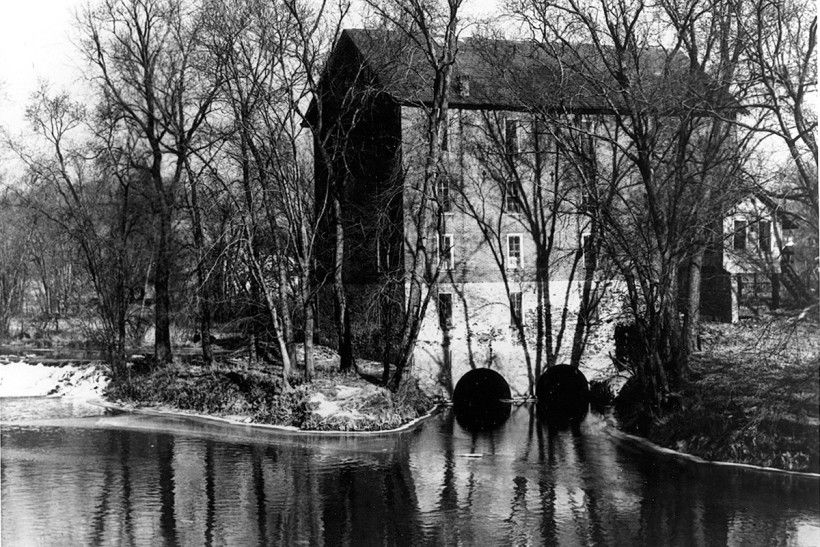
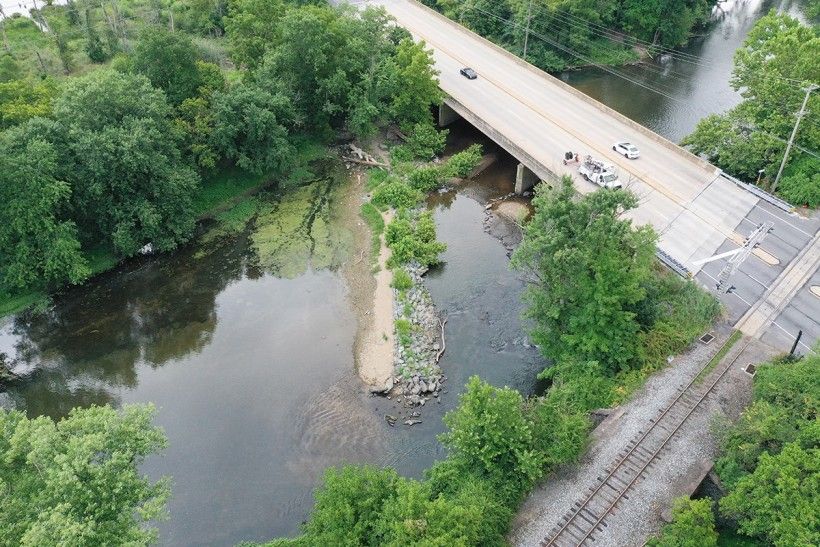
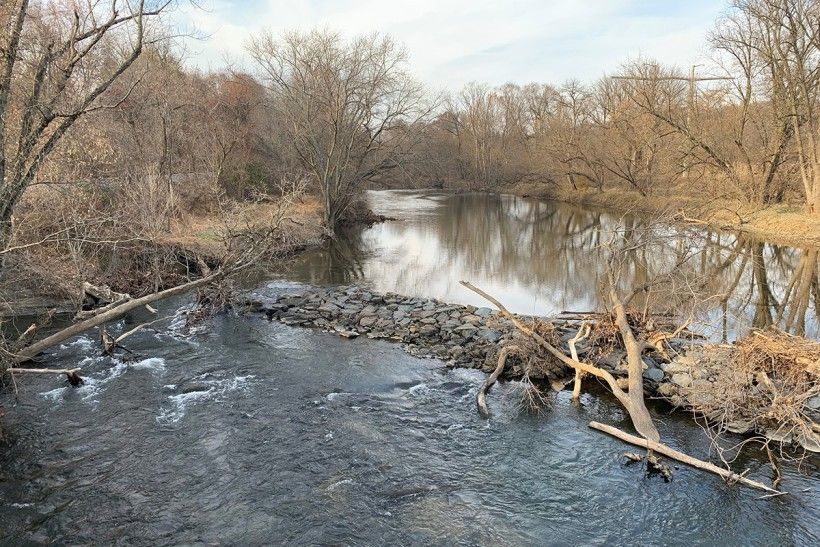
The same could be said for the Hoffman’s Mill dam located along the Brandywine, just upstream from the U.S. Route 1 bridge in Chadds Ford and Pennsbury Townships. Originally built in the late 19th-century to power Hoffman’s Mill (which is now part of the Brandywine Museum of Art), it continued to be in active use as a sawmill until the mid-20th-century. However, today the dam serves no functional purpose and is breached on its western side.
Reasons for Removal
Once low head dams serve no functional purpose, it is worth considering their removal for a variety of reasons. Dams are significant safety concerns for recreational users traveling down the Brandywine, as well as to any inquisitive individual who may be exploring the area on foot. Even under normal conditions, dams represent a significant impediment to recreational use of the Brandywine as they require paddlers and those in tubes to portage (a word derived from the old French word porter, which means to carry) around them to continue their journey downstream.
Dams can also negatively impact the natural habitat of our rivers in numerous ways. In addition to interrupting the natural migration patterns of aquatic species, dams slow flow, which increases water temperatures behind the dam and lessens the availability of oxygen for aquatic organisms. Dams also trap suspended river sediments, which modifies the bed of the river, blanketing important riverine habitat areas known as riffles (shallower, faster flowing sections of a stream where rocks break the water surface). Furthermore, in some cases, rather than reducing the impact of floods by storing flood waters in reservoirs, low head dams may accentuate flooding alongside and upstream of their location as they generally don’t have large storage reservoirs and can trap debris carried by floodwaters, increasing the artificial height of the impediment.
Moving Forward
For many of the reasons outlined above, back in 2020 the Brandywine Conservancy began to contemplate the removal of the Hoffman’s Mill dam. After careful consideration, the removal of the dam was considered a net benefit to our broader mission and to some of our ongoing efforts to improve recreational access to the Brandywine, lesson flooding in the Chadds Ford area, and to assist in a regional effort to facilitate the migration of American Shad up the Brandywine to spawn, a migration pattern that has been stalled since the first dams were constructed in Wilmington, DE back in the early 1700s.
Over the past several years, the Conservancy has secured funding from the National Fish and Wildlife Foundation (NFWF), with support from the U.S. Fish and Wildlife Service, the Pennsylvania Department of Conservation and Natural Resource (PA DCNR), and the Townships of Chadds Ford and Pennsbury to assist in the removal of the dam. Once funding had been secured and a competitive bidding process was undertaken, Brandywine selected Ramboll as our engineering consultant on the project. Over the past two years, Ramboll has provided the design services and, with the assistance from Brandywine staff, has overseen the extensive permitting process. Once removal begins, they will also provide construction oversight. Brandywine's Assistant Director of Community Services, Rob Daniels, has acted as the project manager overseeing the work of our consultants.
The work to physically remove the dam is anticipated to take place in early October 2026 and take approximately two weeks to complete. Stonewood Landshaping, a company with extensive experience in stream restoration projects and other stormwater solutions, was selected to complete the work through a competitive bidding process. Every aspect of the removal is considered during the design phase, including its impact on the hydrology of the creek and the surrounding natural areas, and the consideration of any historical or archeological resources that may be in the project area. In addition, coordination with a variety of stakeholders in the vicinity of the dam site was conducted, including the Pennsylvania Department of Transportation, PECO, and the East Penn Railroad. As part of the larger permitting process, input was also sought from both Townships, the Chadds Ford Historical Society (a neighbor of the project), the Chester County Planning Commission, and the Delaware County Planning Department.
With the protection of cultural resources clearly identified in our organization’s mission, it is important that we recognize the role that Hoffman’s Mill and its dam have played in the history of the Chadds Ford area. To that end, careful attention will be given to documenting the dam with imagery, and educational opportunities to inform the visiting public of its history and role after its removal will be developed. In addition, careful consideration will be given to the reuse of the materials that make up the dam.
This project has involved an enormous number of hours behind the scenes for close to six years, so we're excited for the restoration work to finally begin.
Lead photo credit: Rob Daniels