Moving Forward: Turning Miles into Meaning
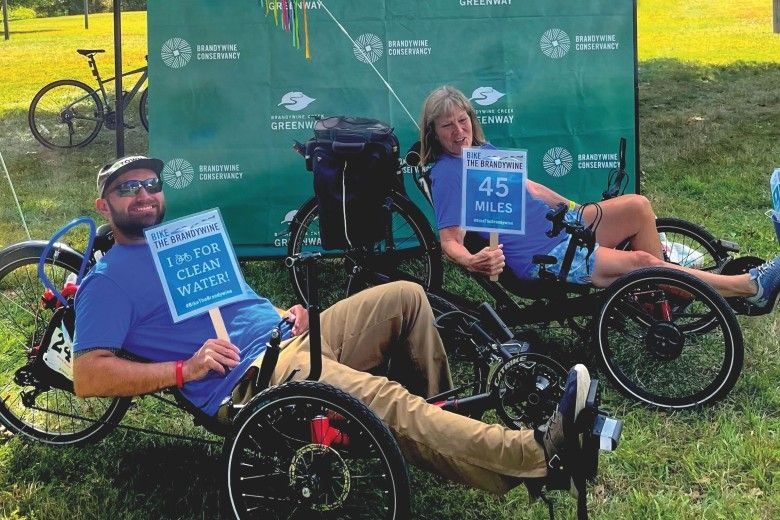
On the winding roads of southern Chester County, where rolling hills meet open sky, Jack and Monica Perme found something more than scenic beauty. Together, they found momentum, community, and in many ways, they’ve found their way forward.
Last year, the mother-son duo joined riders at the Brandywine Conservancy’s Bike the Brandywine event, pedaling through 45 miles of the very landscapes that define this region. For both, the experience was as much about connection as it was about the ride. “The countryside was beautiful and people were so friendly,” Monica recalls. “There was so much interest in our recumbent trikes—it was just a great experience.” For Jack and Monica, every ride—whether local or across state lines—serves a deeper mission shaped by optimism, resilience, and a rare neurological condition that changed everything.
A Diagnosis Years in the Making
At first, it was easy to explain away—a young boy running into walls, a little clumsiness. Maybe he just needed glasses. But as the years passed, the small signs accumulated into something harder to ignore. What began as subtle coordination challenges in childhood would eventually lead to a diagnosis that reshaped not only Jack’s life, but also his purpose.
That diagnosis was Spinocerebellar Ataxia (SCA)—a degenerative neurological condition affecting an estimated 20,000 people in the United States that disrupts balance, coordination, and motor control. For Jack, it wasn’t identified until 2020 when he was 22 years old, after years of uncertainty and a steady progression of symptoms. By then, walking had become difficult. Within a year, he was using a wheelchair.
“I was scared,” Jack recalls of the time leading up to his diagnosis. “I didn’t know what was going on with my body.” The answer, when it came, brought clarity—but also a new reality. There was no cure. No established treatment. Much about the condition remained unknown. Jack’s response was simple—and quietly extraordinary. “Well, okay,” he said. “Maybe I can help someone.”
The Freedom of Three Wheels
Before ataxia changed his daily life, Jack had been active and independent. He worked with his hands, building things out of wood. He lived on his own and moved through the world freely. One by one, those freedoms slipped away. Woodworking became impossible due to tremors and coordination challenges. Independence gave way to moving back home with his mother. Even leaving the house required assistance.
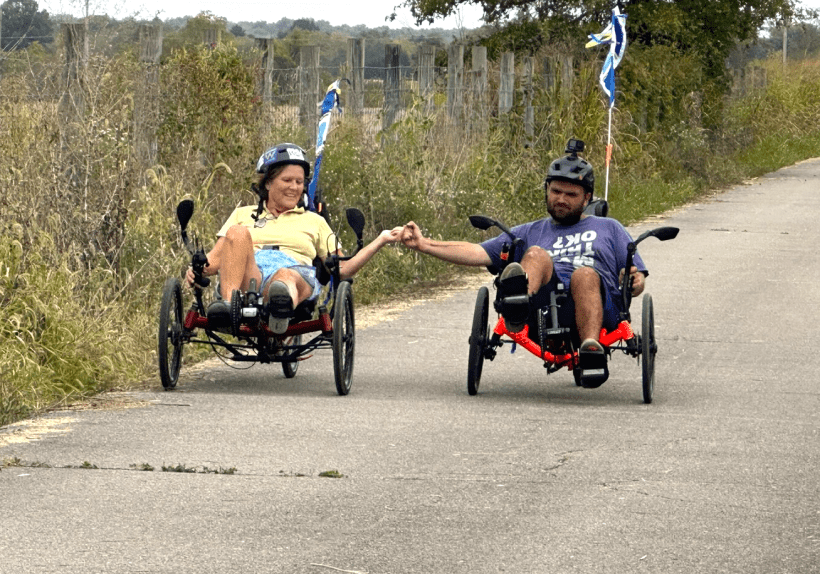
Then came an unexpected turning point: a recumbent trike. Recommended by Mike Cammer, a fellow Downingtown resident with the same condition, the three-wheeled, low-to-the-ground bicycle offered something Jack hadn’t felt in a long time—mobility on his own terms.
“At first, I just did a few laps around the park,” he says. “But it felt so freeing.” That feeling didn’t fade. It expanded. What began as short rides turned into longer distances and, eventually, into something much bigger.
Miles That Matter
Inspired by endurance cyclist Kyle Bryant, who also lives with ataxia, Jack began imagining what might be possible—not just for himself, but for others living with the condition. Together, Jack and Monica mapped out an ambitious ride: a 1,500-mile journey spanning from Maine to Ohio. Over 41 days, they climbed more than 55,000 feet of elevation.
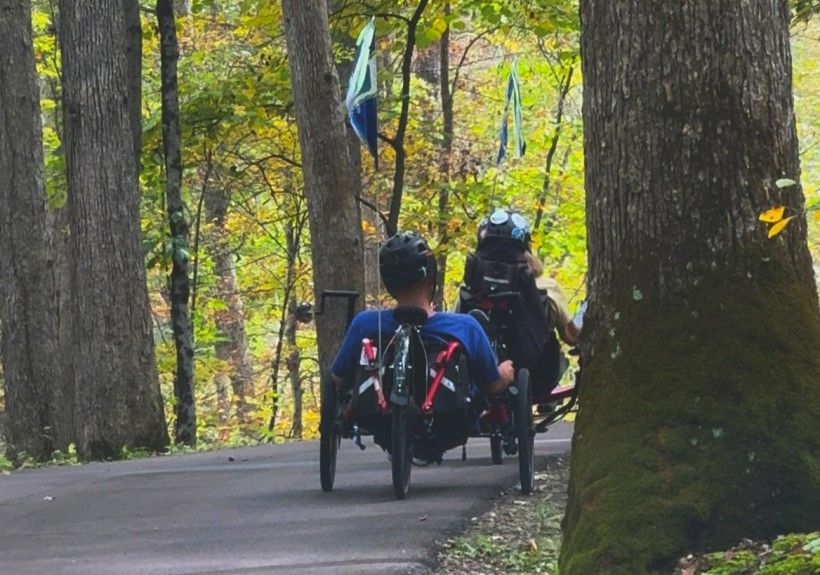
For Monica, who had never considered herself a cyclist, the journey was just as transformative. “At age 62, riding 1,500 miles was a significant accomplishment,” she says. “But doing it alongside Jack—that was everything.” The ride wasn’t just about distance. It was about reclaiming something that ataxia had threatened to take away: independence, joy, and connection. Along the way—and in the months that followed—their story began to resonate, inspiring others through every mile they logged.
More Than Movement
While there is no cure for SCA, staying active for as long as possible is the primary treatment goal, and recumbent trikes provide a safe and joyful way to exercise. Unfortunately, the cost of a trike can be prohibitive for most who are on a fixed income because of their disability. To raise awareness—and funds—Jack and Monica founded the nonprofit Moving Forward For Ataxia, aimed at providing recumbent trikes to individuals diagnosed with the disease. Since its founding, the organization has raised more than $40,000 and donated 17 trikes, with more on the way.
The impact, Jack and Monica say, is immediate and profound. “They’re grinning ear to ear,” Monica says. “You see the joy right away.” For some, it means riding alongside their children for the first time. For others, it’s a way to re-enter a world that had begun to feel out of reach. One recipient shared that receiving a trike “gave him back part of his life he thought was gone forever.” “These stories,” Monica says, “are why we do this.”
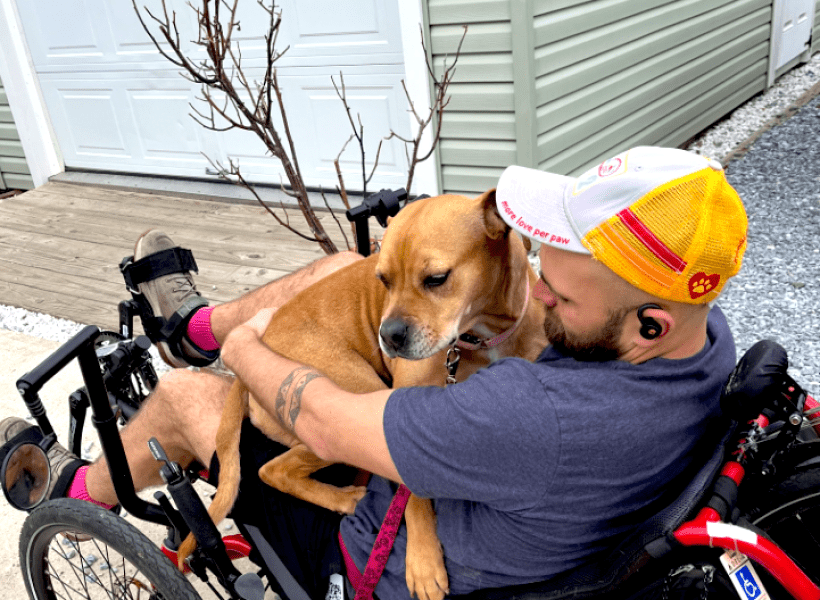
For Jack, the physical benefits of riding have been remarkable, as well as the social, emotional, and communal benefits it has provided. After years of consistent effort, he has gone from relying on a wheelchair back to walking unassisted. Recently, he logged a nine-mile walk—something he once couldn’t imagine.
Looking Ahead
While the foundation has already changed lives, Jack is thinking bigger. Much bigger. “I want to help as many people as possible,” he says. “Not just those with ataxia.” His long-term vision? Expanding access to recumbent trikes through broader healthcare support—potentially even Medicare coverage—so that people with a wide range of mobility challenges can benefit. It’s an ambitious goal. But then again, so was riding 1,500 miles.
For now, they’re focused on what comes next—more rides, more recipients, and more moments of freedom rediscovered. This year, Jack and Monica plan to take on multi-day cycling events including the Great Ohio Bike Adventure (GOBA) and the Register’s Annual Great Bicycle Ride Across Iowa (RAGBRAI), with an ambitious journey along the Mississippi River already on the horizon for 2027. Closer to home, they’re hosting a local fundraising ride in Downingtown this fall on September 26 and are considering a return to Bike the Brandywine, schedules permitting.
Grounded by the beauty and bike-friendly roads of southern Chester County, their journey continues to expand in both distance and impact. Because for Jack and Monica Perme, moving forward isn’t just the name of an organization. It’s a way of life.
All images courtesy of Jack and Monica Perme